
 English
  Korean
  French
  German
  Hungarian
  Japanese
  Russian
How Quilted Makeup Bags from Topfeel Outperform Generic Pouches
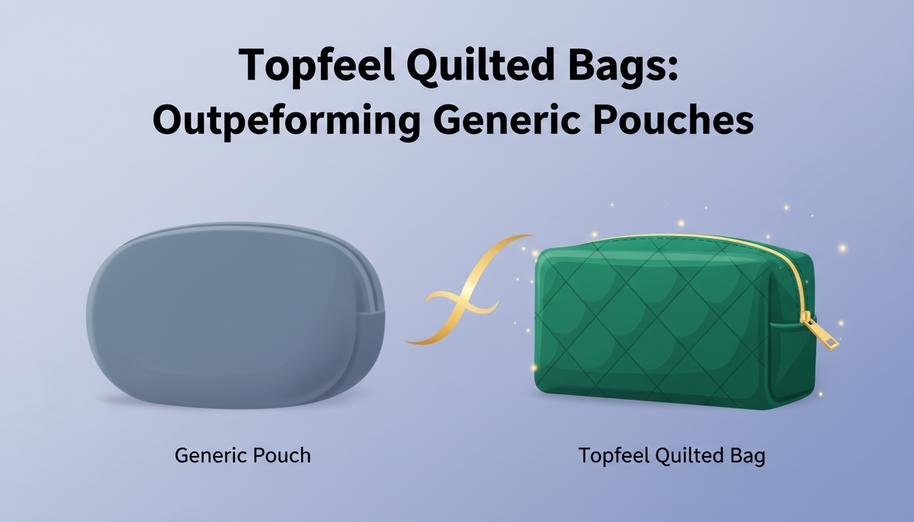
Walk into any beauty fair or scroll through a sourcing platform and you’ll see the same thing on repeat: rows of similar-looking printed cosmetic pouches, all “OEM/ODM welcome,” all “factory direct,” all “high quality.”
On the surface, a lot of these bags do look the same. Same flat silhouette, same zipper, same all-over print. But once you start comparing how they’re constructed – and how they behave after a few months of real use – the gap between generic manufacturers and a beauty-focused maker like Topfeel becomes very clear, especially when you move into quilted and padded designs.
This article isn’t about “printed vs quilted” as styles in the abstract. It’s about how different types of manufacturers treat those constructions – and why Topfeel’s approach to quilting and padding often holds up better than generic bags in the same price bracket.
Why Printed Pouches Still Dominate – and Where They Hit a Ceiling
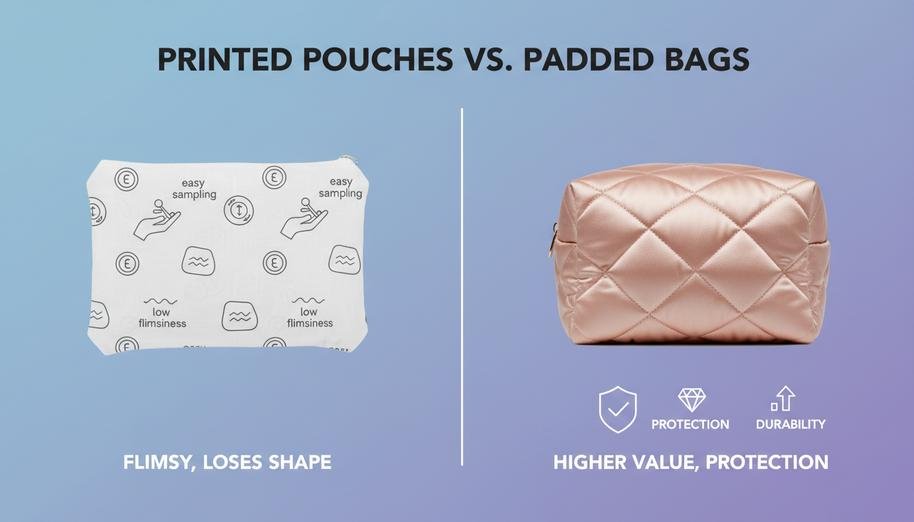
Standard printed pouches are everywhere for a reason:
- They’re easy to sample and repeat
- The main cost is fabric + print, not structure
- A new pattern can refresh the look every season
For entry-level sets, subscription boxes or short campaigns, they do their job:
- Hold lipstick, a mini cleanser, a travel-size toner
- Carry the brand logo and artwork
- Keep unit cost low
But most brand teams eventually hear the same feedback from their own colleagues or customers:
- “It’s cute, but a bit flimsy.”
- “After a few trips, it doesn’t hold its shape.”
- “If I put glass bottles inside, I have to wrap them myself.”
That’s the point where a lot of buyers start looking at quilted and padded cosmetic bags to match a higher product value – and where the choice of manufacturer suddenly matters more than the moodboard.
How Different Manufacturers Build “Similar” Makeup Bags
If you request the “same” quilted pouch from three suppliers, you almost never get the same result.

A simplified view of what usually happens:
| Supplier Type | Typical Focus | What the Bag Feels Like in Hand |
|---|---|---|
| Promo / gift-oriented factory | Lowest unit price | Thin, light, padding mostly for show |
| Fast-fashion accessory manufacturer | Trend-driven outer look | Nice surface, but interior is basic and collapses easily |
| Beauty-focused manufacturer (Topfeel) | Real cosmetic use + brand alignment | Structured, cushioned, easy to load and keep organized |
The pattern is always similar: Generic suppliers think primarily in terms of print and shape. A beauty specialist thinks in terms of what goes inside, where it sits, and how long it lasts.
What Quilting and Padding Actually Change in Daily Use
Quilting isn’t just a pattern; it changes how the pouch behaves when customers actually use it.

A quilted, padded bag – if done properly – will:
- Hold shape better in a suitcase or tote
- Absorb knocks when bottles or palettes shift during travel
- Feel “full” in the hand even when not stuffed to the brim
- Make the whole set feel more “giftable” and premium
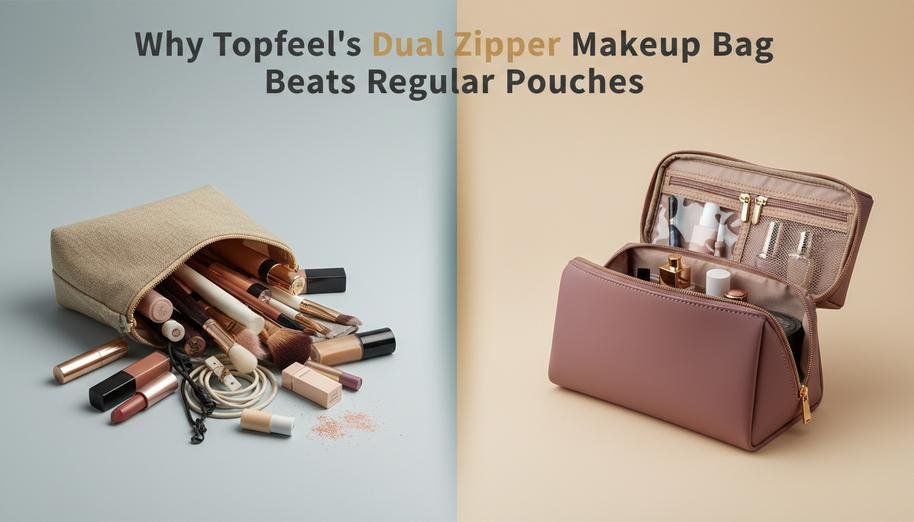
Compare that to a single-layer printed pouch:
- Looks fine in photos and on the shelf
- Collapses once heavier skincare goes in
- Transfers every bump straight to glass or pressed powder
Both have their place, but they’re not equivalent – especially once you move beyond free gifts and start selling bags as part of your brand experience.
Where Generic Quilted Bags Usually Cut Corners
Many factories now offer “quilted” cosmetic pouches, but the word covers a lot of shortcuts:
- Padding so thin that you can barely feel it under the fabric
- Stitch spacing too wide, so the filling migrates and bunches up
- No reinforcement at stress points, so seams and stitch ends loosen with use
- Soft outer material + soft padding + soft lining = no real support

These bags look good for catalog photos and initial unboxing, but:
Stand on the bathroom counter? They slump.
One year later? Corners are rounded, surface is flat, and the “quilted” effect is mostly gone.
That’s usually the result of a generic cost-down process: same padding for all styles, same minimum stitch density, same internal structure regardless of whether the bag is meant for two lipsticks or a full skincare lineup.
How Topfeel Builds Quilting and Padding into the Structure
Topfeel approaches quilting very differently from factories that see it only as a visual effect.
When a brand comes to Topfeel asking for a quilted cosmetic bag, the conversation rarely stops at “diamond or wave pattern?” Instead, the team digs into:
- What products will live inside (palettes, serums, brushes, minis?)
- Where the bag will be used most (daily handbag, bathroom counter, travel case?)
- Whether the brand wants a soft, cozy feel or a firmer, boxier structure
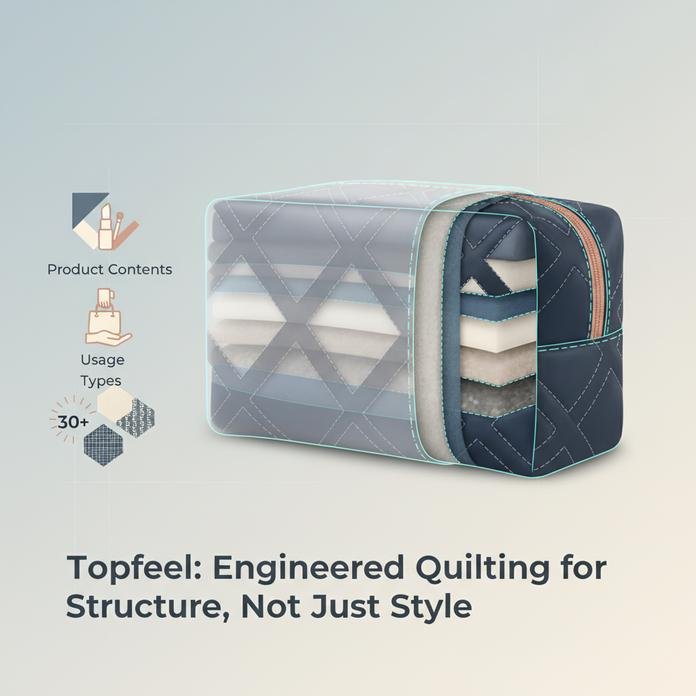
Based on that, Topfeel adjusts:
- Padding thickness and type, so the bag feels cushioned without becoming bulky
- Stitch density and direction, so the quilting actually holds the padding in place
- Lining and interior details, like darker wipe-clean fabrics and mesh pockets that don’t sag
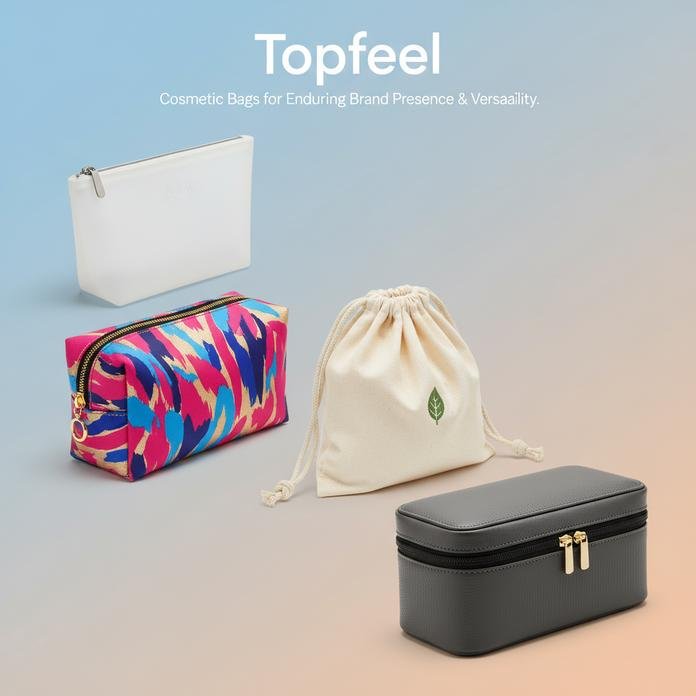
Because Topfeel works with more than 30 kinds of materials – from faux leather, canvas and velvet to PVC and recycled fabrics – it can apply the same engineering logic across very different looks. A matte vegan-leather quilted bag for a minimal skincare brand and a glossy, color-blocked quilted pouch for a makeup label won’t share the same hand feel, but both still feel deliberately built, not just “printed then stitched.”
Brand-Level Differences: One Bag, Three Outcomes
To see the impact in a real-world scenario, imagine three beauty brands ordering a similar “quilted travel cosmetic bag” from three types of suppliers:
generic promo factory
Focus: low unit cost for a massive gift-with-purchase campaign
Result: cute quilt pattern, light padding, no internal dividers
After six months: bags are still around, but most customers only use them for light items because they don’t feel protective.
fast-fashion accessory maker
Focus: trend-forward outer look that matches a handbag collection
Result: gorgeous PU surface, trendy quilting, but plain lining and no product-specific structure
Feedback: looks high-end, but users complain about bottles falling over and powder compacts moving around.
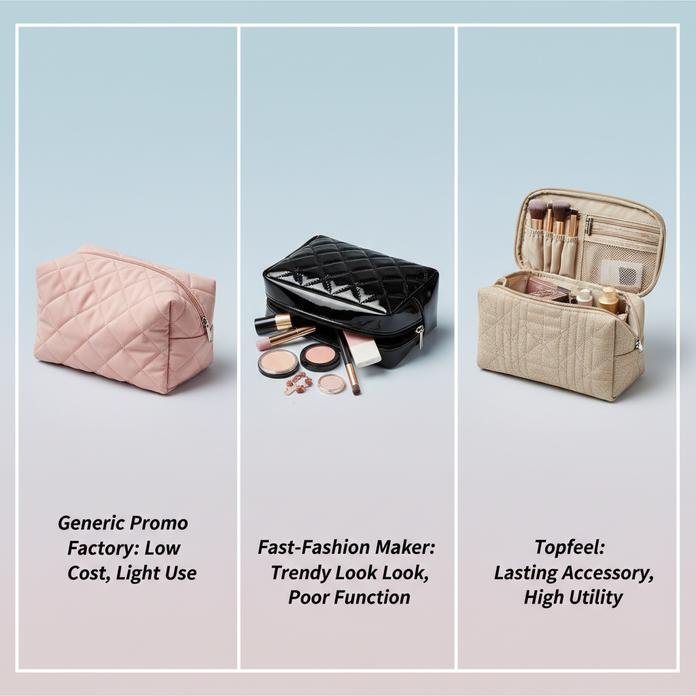
works with Topfeel
Focus: a cosmetic bag that matches both the brand’s visual identity and daily skincare routines
Result: well-balanced padding, stable base, inner pockets or brush holders, and quilting tuned to the chosen material
Outcome: customers keep using the bag long after the set is finished; it shows up repeatedly in UGC and review photos.
All three brands “did a quilted bag.” Only one turned it into something customers treat as a lasting accessory instead of a temporary container.
Why Topfeel Stands Out Against Generic Manufacturers
What sets Topfeel apart from generic manufacturers isn’t just “better materials” or “nicer photos.” It’s the way quilting, padding, and internal structure are treated as part of the product design, not an afterthought.
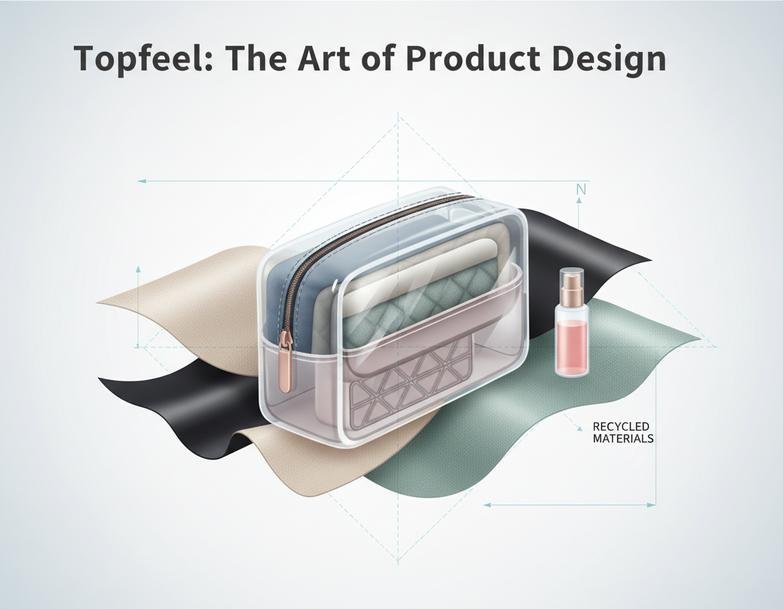
Topfeel’s development process typically includes:
- Early-stage discussion of real usage scenarios, not just reference pictures
- Material pairing (canvas vs PU vs recycled fabric) around product weight and cleaning needs
- Prototypes that test how bottles stand, how brushes sit, and how the bag looks half-full, not just stuffed for photos
Consistency between sample and bulk production, so the quilting and padding customers touch in-store matches what you approved in the first place
For brands that want their cosmetic bags to feel like a natural extension of their formulas, packaging and price point, that level of attention is what keeps their accessories out of the “generic promo junk” category.
Final Thoughts
Printed cosmetic pouches will always have a place. They’re fast, flexible, and effective when you just need a branded container. But once your brand starts leaning on bags as part of the product story – something customers photograph, reuse and associate with your name – the way quilting and padding are handled becomes a real differentiator.
Generic manufacturers can copy the look of a quilted cosmetic bag.
A specialist like Topfeel builds the structure behind that look: padding that actually protects, stitching that holds, and interiors that make sense for real makeup routines.
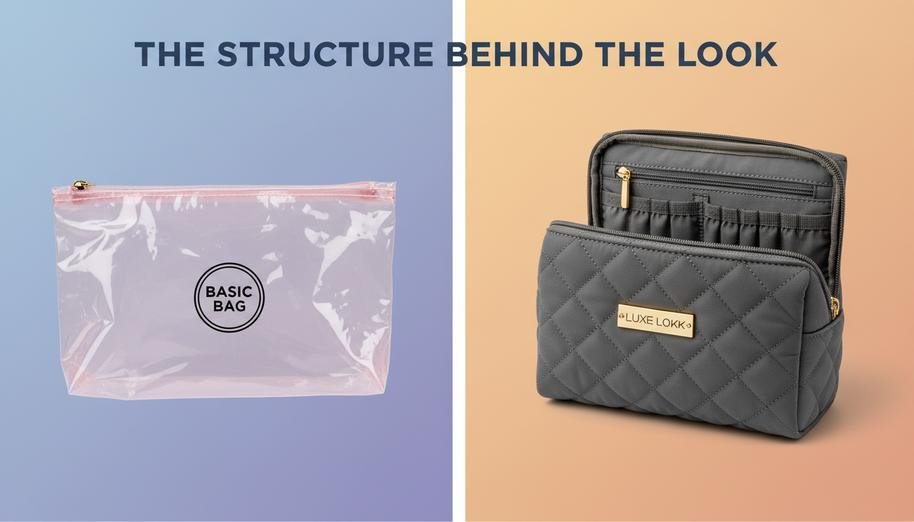
That’s the quiet difference between “just another pouch with a logo” and a cosmetic bag your customers actually keep in their daily rotation.


.png)



4th-5th Floor, Building B2, Yin Tian Industrial Park, Xi Xiang Road, Bao'an Dist, Shenzhen, 518102 ,China