
 English
  Korean
  French
  German
  Hungarian
  Japanese
  Russian
The Definitive Fabric Weight Guide: Understand GSM and Oz Clearly
Ever picked up a cosmetic bag that looked cute online—but in person felt like it was stitched from tissue paper? Yeah. That’s what happens when folks skip the fabric weight guide and guess their way through GSM and Oz. Spoiler: guessing doesn’t end well, especially with bulk orders.
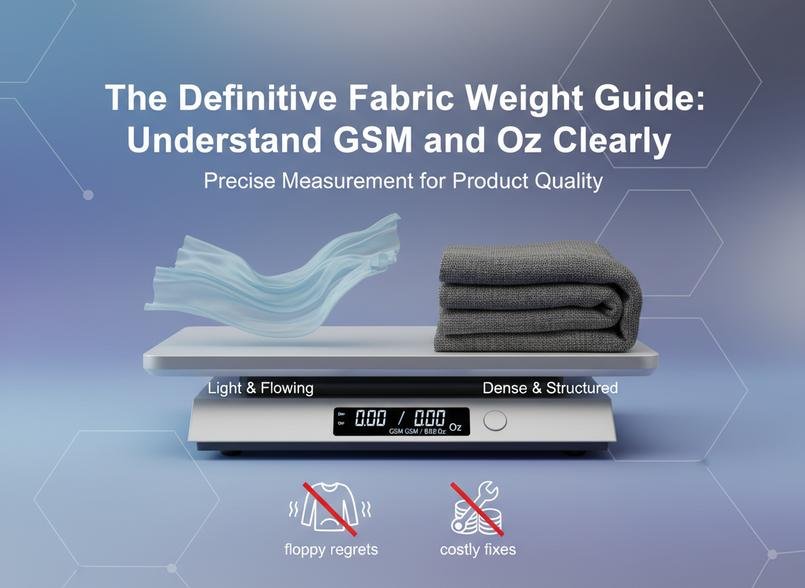
One of our senior engineers at Topfeel said it best earlier this year: “The difference between 8oz canvas and 280 GSM twill isn’t just math—it’s how your brand feels in someone’s hand.” And she wasn’t kidding. Texture, structure, vibe—it all starts with weight.
You’re not just buying fabric. You’re committing to how your product shows up in the world—too floppy, too stiff, or just right. Skip the confusion now so you don’t eat shipping fees later.
Stick around—we’ll break down GSM vs Oz like a friend who actually knows what they’re talking about (minus the jargon headache).
Understanding Fabric Weight: GSM vs. Oz Uncovered
Get the lowdown on how fabric weight affects your project — from durability to drape, we’re breaking it all down.
Decoding GSM: What’s in a Number?
GSM, or grams per square meter, is like the heartbeat of a fabric — it tells you how dense and sturdy that material really is.
- A higher GSM means:• Thicker fabric
• Better insulation
• Stronger wear resistance
- Lower GSM fabrics are:• Lighter
• More breathable
• Ideal for summer wear
| Fabric Type | Typical GSM | Common Use | Durability Level |
|---|---|---|---|
| Cotton T-shirt | ~160 | Casualwear | Medium |
| Denim | ~350 | Jeans & Workwear | High |
| Silk | ~50 | Scarves & Linings | Low |
| Canvas | ~400 | Bags & Upholstery | Very High |
So when someone hands you a swatch and says “180 GSM,” now you know — it’s not just a number; it’s the fabric’s personality.
GSM vs. Oz: Key Differences Explained
Let’s break this down so it’s not just metric vs imperial mumbo jumbo:
Measurement System:
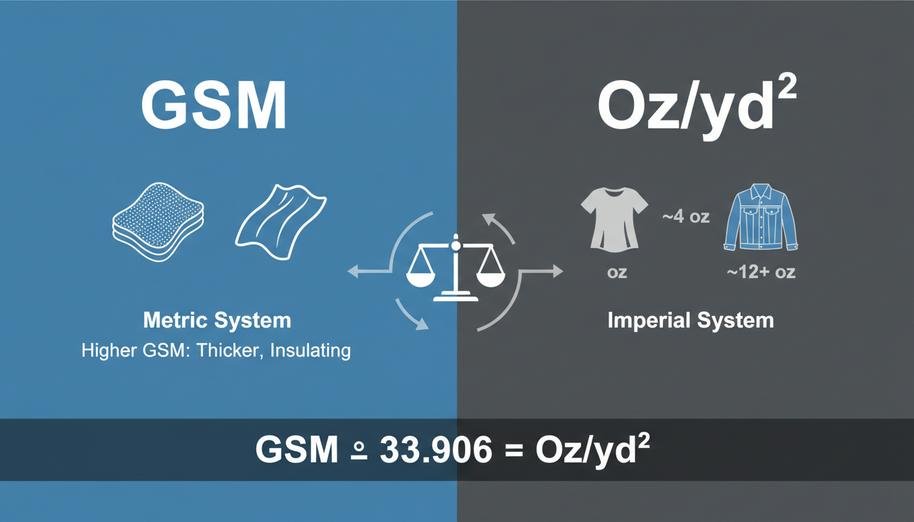
- GSM = Metric system used globally
- Oz/yd² = Imperial system common in U.S., Canada
Conversion Complexity:
There isn’t an exact one-size-fits-all formula because fiber types affect density — but here’s a rough ballpark:
GSM ÷ 33.906 = Oz/yd²
Example? A cotton fabric with 200 GSM roughly equals 5.9 oz/yd², but polyester with the same weight may feel lighter because of its fiber properties.
Use Case Preference:
• Designers working internationally lean toward GSM for consistency across suppliers.
• Local retailers often stick with ounces to match customer expectations.
So don’t sweat if you’re flipping between both — just know what you’re measuring and why.
Choosing Between GSM and Oz for Your Needs
Picking between these two isn’t about right or wrong — it’s about choosing what fits your vibe best.
☑️ Want clarity when sourcing overseas? Go with GSM – it’s more universal.
☑️ Selling locally where customers expect ounces? Stick to oz/yd², especially if targeting U.S.-based buyers.
☑️ Prioritizing comfort over durability? Look at lower weights regardless of unit.
☑️ Need industrial-strength stuff like upholstery or gear bags? Higher numbers win every time.
And if you’re still unsure which route to go when comparing materials side-by-side? Brands like Topfeel make it easy by listing both metrics clearly so buyers can focus on what really matters: choosing the perfect textile without second guessing themselves.
This isn’t just some boring math lesson; knowing your way around a solid fabric weight guide makes every cut cleaner and every stitch smarter.
How to Choose the Right Fabric Based on Weight
Picking the right textile weight can totally change how your project turns out—comfort, look, and feel all depend on it. Let’s break it down.
Consider Your Project: Understanding Weight Requirements
- Lightweight fabrics like cotton voile or chiffon are ideal for summer wear and breathable linings.
- Midweight options such as poplin or jersey work well for shirts, dresses, and casual slacks.
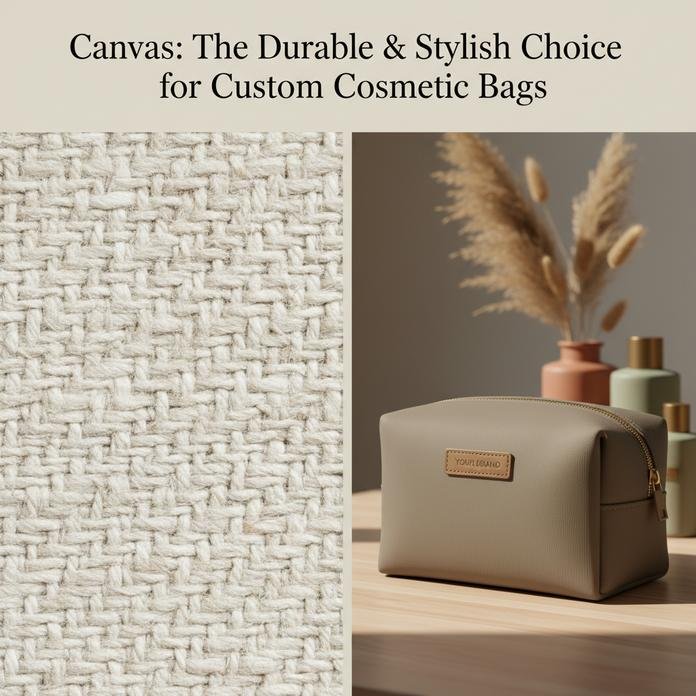
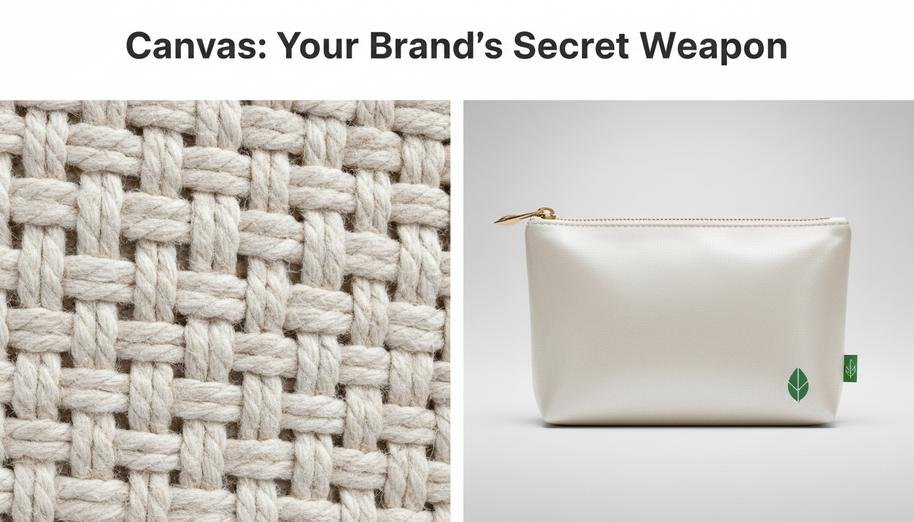
- Heavyweights like canvas or wool blends bring durability—perfect for coats, upholstery, or handbags.
The key is knowing what your project demands. A floaty dress doesn’t need the same fabric weight as a structured jacket. Always match material density with function and comfort—don’t just go by feel alone.
Fabric Applications: Does Weight Really Matter?
• Yes—it seriously does! The weight of a textile affects how it hangs, moves, and even breathes.
• For example:
- A light rayon will drape softly but won’t offer much warmth.
- A dense denim brings strength but might feel stiff on skin.
• Fashion designers often rely on precise fabric weight guide metrics to predict garment behavior during motion.
When choosing between similar styles, always check the GSM or Oz rating—it’s not just fluff; it’s science that supports performance.
Creating Balance: Weight Versus Purpose
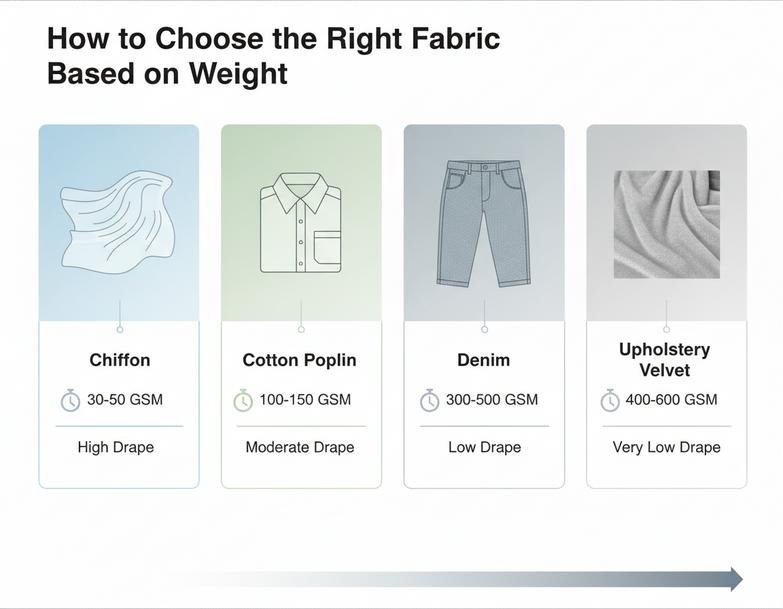
| Fabric Type | Average GSM Range | Common Use | Drape Quality |
|---|---|---|---|
| Chiffon | 30–50 | Scarves, overlays | High |
| Cotton Poplin | 100–150 | Shirts, uniforms | Moderate |
| Denim | 300–500 | Jeans, jackets | Low |
| Upholstery Velvet | 400–600 | Sofas, cushions | Very low |
Don’t just chase aesthetics—balance matters. If you’re sewing curtains that need flow but also privacy? Go mid-heavy with a soft weave. Making activewear? You’ll want stretch + low-to-mid GSM for breathability and movement. That’s where brands like Topfeel shine—they offer curated weights across collections so you can nail both style and function every time without second guessing your choice from the fabric weight guide.
Top 3 Considerations When Evaluating Fabric Weight
Choosing the right fabric weight isn’t just about numbers—it’s about how it performs, feels, and looks in real life.
Performance Metrics: How Weight Impacts Durability
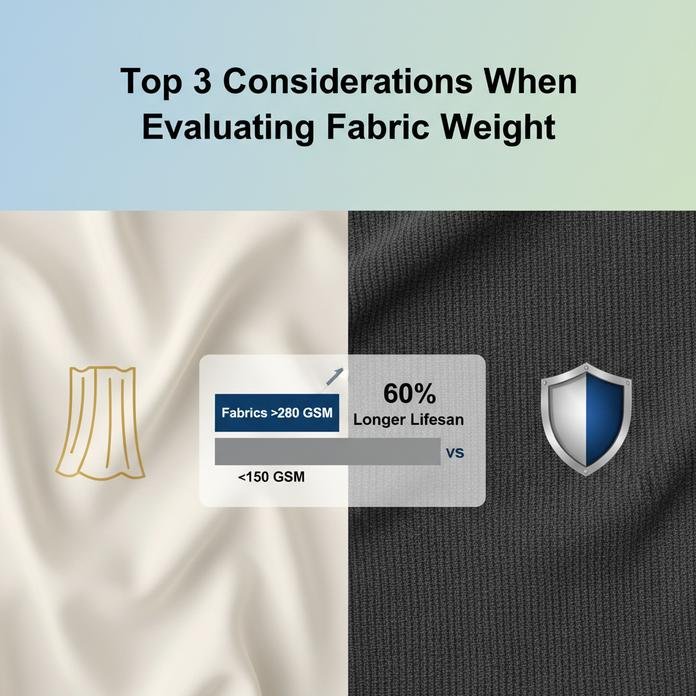
• Heavier fabrics like canvas or denim tend to handle abrasion better. They’re built to last through more washes and rougher use.
• Lightweight options such as voile or chiffon may feel airy but can wear out faster if used daily.
• Mid-weight fabrics like poplin strike a balance between comfort and resilience.
- Durability by GSM: A fabric weight guide often places high-GSM materials at the top of the durability chart. Anything over 300 GSM usually means serious toughness.
- Moisture resistance improves with increased fabric density, especially in outdoor textiles.
- Thicker materials offer better insulation—ideal for jackets, upholstery, or winter wear.
— Fabrics with higher GSM also resist tearing better during stitching or stretching phases.
Industry data indicates that fabrics above 250 GSM, like canvas and denim, offer significantly higher abrasion resistance compared to lighter weaves.
Aesthetic Choices: Weight and Look of the Fabric
Lightweight = flowy and breezy; heavyweight = structured and bold.
- Want a soft drape? Choose something around 100–150 grams per square meter.
- Going for tailored looks? Opt for something closer to 250–350 GSM.
- For form-fitting garments, mid-range weights give you structure without stiffness.
| Fabric Type | Typical GSM Range | Best Use Cases | Drape Quality |
|---|---|---|---|
| Chiffon | 30–50 | Scarves, overlays | High |
| Poplin | 120–160 | Shirts, dresses | Moderate |
| Denim | 300–450 | Jeans, jackets | Low |
| Canvas | 400+ | Bags, upholstery | Very Low |
The fabric weight guide helps match aesthetics with function—because nobody wants their curtains looking like stiff cardboard or their blouse sagging like a wet towel.
Short tip bursts: • Lightweight = elegant movement but less opacity
• Mid-weight = versatile across seasons
• Heavyweight = crisp silhouettes that hold shape
In short: The look of your garment starts with its weight class—and ends with how it moves on your body.
By understanding both visual impact and functionality tied to ounces per square yard, designers can avoid mismatches between concept and reality when choosing materials from any reliable textile measurement chart.
FAQs about Fabric Weight Guide
How does fabric weight shape the life of a cosmetic bag?
Like the bones under skin, weight gives a bag its staying power. Heavy fabrics — counted in GSM or Oz — resist fraying and sagging when dragged from suitcase to countertop. Lighter ones whisper with grace but surrender quicker to rough hands. It’s a tug between endurance and elegance every time you choose.
Why pay attention to GSM before bulk ordering bags?
- GSM is your ruler for density: higher means thicker threads packed close together.
- In wholesale runs, this single number decides how customers feel the moment they touch it — sturdy confidence or airy softness.
- Matching GSM to your target audience keeps cost purposeful instead of accidental overspending on heft they may not want.
Does heavier fabric always win for travel-friendly designs?
Strength can be reassuring… until it weighs down your journey. For road warriors, midweight cloth offers resilience without turning into luggage deadweight; too heavy, and portability falters, too light, and longevity weakens under daily handling.
Which fabric weights suit different types of custom bags best?
Light: giveaways needing quick production at low expense — soft yet short-lived charm.
Midrange: retail pieces that survive repeated use while still easy in hand.
Heavy: high-end luxury lines built for constant motion through busy lives where toughness becomes part of their beauty story. We see this often in premium tote bag collections and specialized toiletry bags where structure is paramount.
Do you also make outdoor/daily bags? Which types?
Yes—Handheld Bags, Tote Bags, Accessory Bags, Crossbody Bags, Toiletry Bags; designed for capacity, durability, and water-resistance as needed.
What is the minimum order quantity (MOQ) for cosmetic bags?
1,000 pieces per style.
Can you bundle makeup accessories in sets?
Yes—makeup brushes and makeup blender (typical MOQ 3,000 pcs) can be developed to match the bag’s branding.
Can you use velvet for lining?
Yes, we often use anti-scratch velvet cloth or other soft linings to protect delicate contents.
What if I need special materials/processes?
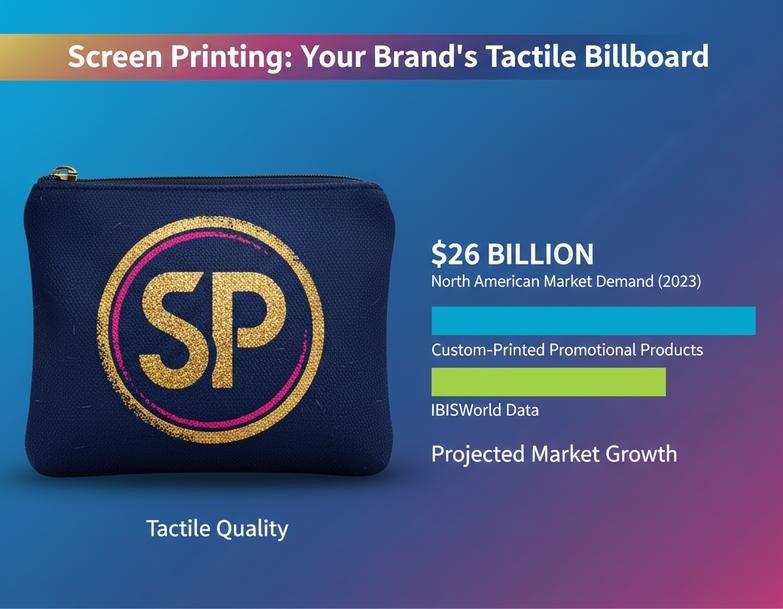
We can meet special requests; MOQ generally increases to 5,000 pieces. Supported techniques include screen print, heat transfer, and more.
How do you ensure structure stability?
Industrial multi-needle sewing; X-stitch/reinforced stitching at vulnerable points; 3D forms use PP plastic bottom plates for support.
References
- Understanding Fabric Weight – Fabric UK
- Fabric GSM & weight | A guide to GSM meaning – SANVT
- What is Fabric Weight & How is it Measured? – Quality Logo Products
- Fabric Weights Explained: A Beginner’s Guide – CUT/SEW Patternmaking
- What Does GSM Mean in Fabric? – Autofiber
- Weight Conversion Table – Custom Apparel Source
- Fabric Weight Chart – Bombay Bags
- Fabric weight help – r/sewing
- Fabric Specifications and Details – Spoonflower Help Center
- Choosing the right denim – MaaiDesign Fabrics
- Cotton Fabric GSM, Thread Count & Weave: Performance Guide – Szoneier Fabrics
- Denim Fabric Weight Guide 2026 – LY Denim
- Why Canvas is the Best Material for Bags – Troop London
- What is Screen Printing? – Wikipedia
- Polypropylene – Wikipedia



.png)



4th-5th Floor, Building B2, Yin Tian Industrial Park, Xi Xiang Road, Bao'an Dist, Shenzhen, 518102 ,China