
 English
  Korean
  French
  German
  Hungarian
  Japanese
  Russian
Jute vs Burlap: Choose the Perfect Fabric for Your Poducts
Ever been stuck in the “jute vs burlap” debate while sourcing cosmetic bags for your brand? You’re not alone. From trade shows to supplier calls, the confusion runs deep—like choosing between oat milk and almond when both sound healthy but only one froths right. Spoiler: these two fabrics may look like twins from ten feet away, but up close? Worlds apart.
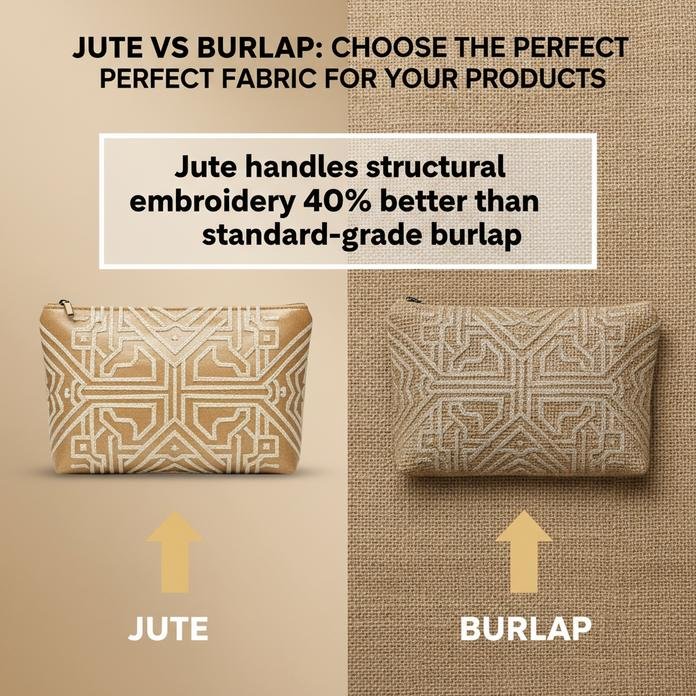
Here’s the deal: buyers want something tough enough to handle lipsticks and lotions without ripping by week two—but still chic enough to sit pretty on a vanity. Burlap has that raw farmhouse charm, sure, but jute brings more muscle and polish to the party. According to Topfeel’s senior product engineer Li Wenjie (2024), “Jute handles structural embroidery 40% better than standard-grade burlap in bulk production.”
If your brand banks on aesthetics and sustainability (because customers today read labels like fine print), picking wrong could cost you more than just dollars—it could dull your image faster than smudged mascara.
Jute vs Burlap: Understanding Their Unique Characteristics
Quick peek into the fibers that shape everything from eco bags to rugged sacks—jute vs burlap isn’t just a style choice, it’s a matter of strength, sustainability, and feel.
Natural fibers: Jute vs Burlap
- Jute is the raw plant-based fiber.
- Burlap, on the other hand, is typically woven from jute, but can include other natural fibers like hemp or flax.
- Think of jute as flour and burlap as bread—it’s the product made from the base ingredient.
You’ll notice that burlap has a rougher surface and looser weave, while jute feels smoother and appears more golden. Both are plant fibers, but jute in its raw form has wider industrial applications before being spun into things like burlap.
Textile strength: Which fabric holds up better?
- When you’re hauling heavy stuff or need something that won’t tear easily, go with pure jute.
- It boasts higher tensile strength, meaning it stretches less under pressure.
- Burlap may fray faster due to its looser structure.
In short, if you’re choosing between them for durability in projects like furniture backing or sandbags—go with jute over burlap every time.
Biodegradable material: Comparing eco-friendliness
• Both are champs at breaking down naturally—no plastic guilt here. • But jute takes the green crown thanks to minimal chemical processing during manufacturing. • It’s also grown with fewer pesticides compared to cotton alternatives.
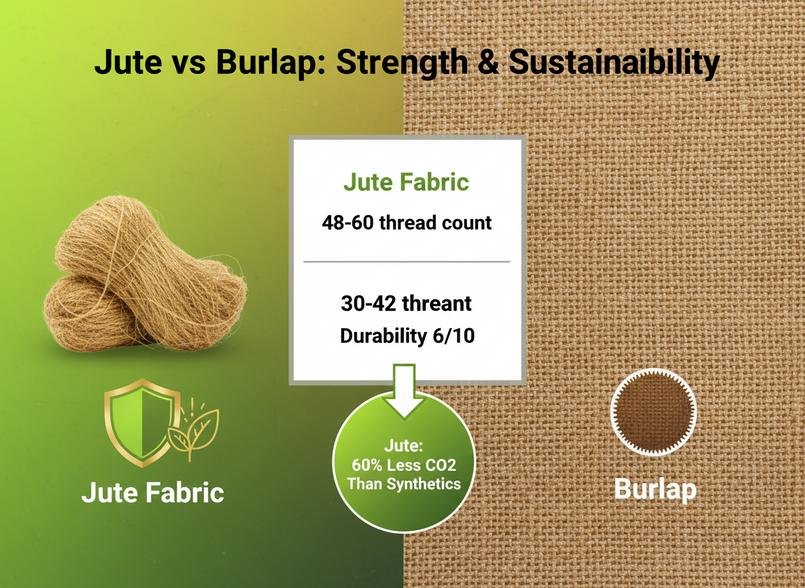
According to a 2024 report by Earthwise Sustainability Index, “Jute production emits 60% less CO₂ than similarly purposed synthetic materials.” That makes it a top pick for conscious brands like Topfeel looking to reduce their footprint without sacrificing quality.
Weave density: What does it mean for durability?
| Material Type | Average Thread Count (per inch) | Durability Rating (/10) | Common Use Case |
|---|---|---|---|
| Jute Fabric | 48–60 | 9 | Industrial packaging |
| Burlap | 30–42 | 6 | Decorative crafts |
| Blended Hemp | 55–65 | 8 | Eco-friendly textiles |
| Cotton-Jute | 50–58 | 7 | Reusable grocery bags |
A tighter weave equals stronger fabric—it’s that simple. The higher weave density in jute gives it more resistance against wear and tear versus burlap’s looser construction. This means your jute bag lasts longer even when tossed around daily.
So next time you’re stuck between these two earthy options, think about what you need most—texture or toughness—and let that guide your pick in this ongoing debate of jute vs burlap.
4 Key Differences between Jute and Burlap
Get ready to unpack what really sets jute apart from burlap—beyond just the feel and look.
Cost & Value Factors
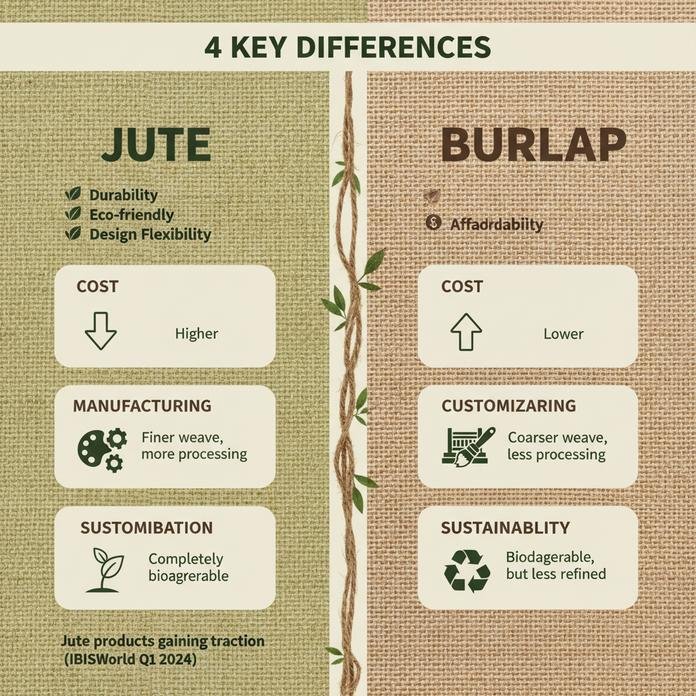
- Price comparison shows that jute tends to land on the higher end, but it’s not just about upfront dollars.
- Jute’s durability means fewer replacements over time, making it more cost-effective for long-term use.
- Burlap is often cheaper because it’s made with less refined fibers and simpler production.
- Market watchers at IBISWorld noted in their Q1 report of 2024 that “jute products are gaining traction due to perceived premium value among eco-conscious consumers.”
- So while burlap wins on affordability, jute edges ahead on overall investment return.
Manufacturing Process
Grouped by stages, here’s how the two materials differ:
🧵 Raw Materials
- Jute comes from high-grade bast fibers needing careful harvesting.
- Burlap often uses coarser leftovers or lower-quality jute strands.
⚙️ Processing
- Jute undergoes multiple steps like retting, stripping, washing, and drying before spinning.
- Burlap skips many of these steps—less labor-intensive but also less refined.
🪡 Fabrication
- Weaving jute requires tighter control for uniformity.
- Burlap weaves are looser and faster to produce.
So when you hear “jute vs burlap,” think precision versus speed.
Customization Options
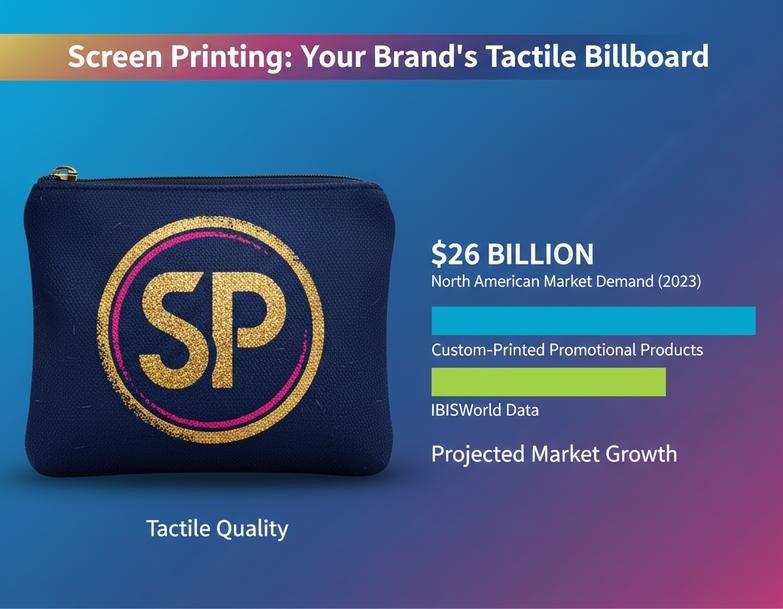
- Screen printing works brilliantly on jute thanks to its smoother surface texture.
- Embroidery holds better on jute fabric due to its tight weave pattern.
- Dyeing options are wider with jute since it absorbs color evenly without bleeding.
- Burlap’s rougher texture limits detailed logos or intricate designs during branding processes.
- For businesses looking into custom bags or packaging, jute offers superior design flexibility and enhanced surface branding potential.
Jute opens up more doors if you’re aiming for standout customization with a polished finish.
Sustainability & Ethics
Let’s break this down into easy bites:
→ Jute is fully biodegradable and sourced as a fast-growing, highly renewable plant—big win for reducing your carbon footprint. → Most modern farms growing jute follow fair labor practices aligned with global standards like WFTO’s ethical sourcing guidelines. → Burlap may still biodegrade, but its production process sometimes lacks transparency around fair trade compliance.
When comparing “jute vs burlap” under a green lens, it’s clear who walks the eco-talk louder. With lower water usage during farming and minimal chemical processing required during fiber extraction, jute stands tall as an authentically eco-friendly, low-impact option worth rooting for.
Why Choose Jute Over Burlap for Your Products?
Jute and burlap get tossed around like they’re twins, but they’re anything but identical. Let’s break down why jute takes the crown.
Eco-friendly fabric benefits
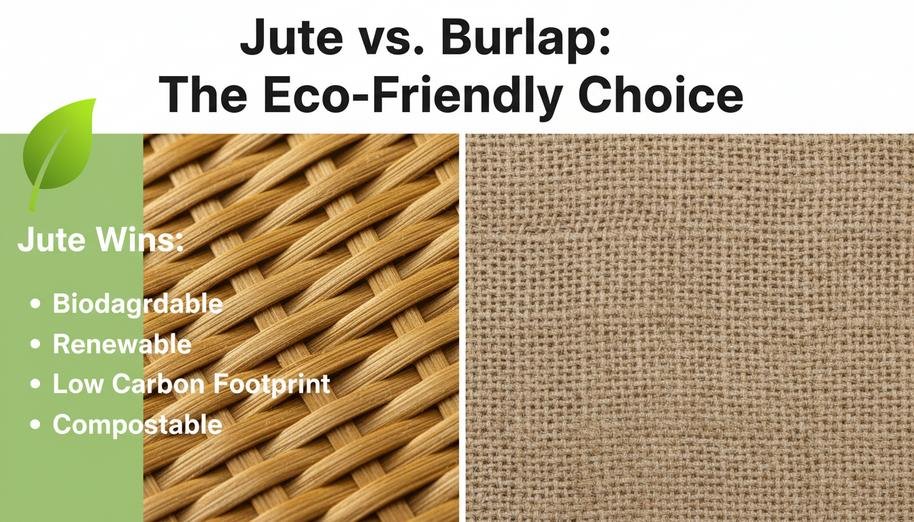
Jute vs burlap—on the eco scale, jute wins hands down. Here’s why:
- Biodegradable: Jute breaks down naturally in just a few months, unlike synthetic alternatives.
- Renewable: It grows fast with minimal water or pesticides, making it a truly renewable crop.
- Low carbon footprint: Processing jute requires less energy than cotton or polyester.
- Compostable: Toss it in your compost bin and it’ll enrich your soil—no guilt involved.
- Less chemical use: Unlike some fabrics that need heavy bleaching or dyeing, jute’s natural tones are already beautiful.
- Breathability: It allows air to circulate, reducing mold risk during storage.
Now when you compare jute vs burlap, remember this—burlap is just a coarse weave of jute or hemp, but not all burlap is made equal or sustainably processed.
Ideal applications for jute-based products
Let’s talk real-world uses where jute shines brighter than burlap:
👜 Retail Bags & Totes – Stronger than plastic and way more stylish, perfect for everyday shoppers who want a bit of eco flair.
🎁 Event Swag – Customizable and durable enough to carry giveaways without tearing apart mid-conference.
📦 Packaging – From artisanal soaps to gourmet snacks, businesses love the rustic yet polished look of jute wrapping.
🌾 Agricultural Use – Its natural properties make it ideal as mulch mats or erosion control fabric on farms and slopes.
🛋️ Home Decor – Think cushion covers and rugs that bring warmth without harming the planet.
🎨 Handicrafts – Artists prefer it over burlap thanks to its smoother texture and better dye absorption.
📊 Here’s how jute stacks up against burlap across key performance areas:
| Feature | Jute | Burlap | Verdict |
|---|---|---|---|
| Strength | High | Moderate | Jute wins |
| Sustainability | Excellent (renewable) | Variable | Jute leads |
| Texture | Smooth | Coarse | Depends on use |
| Compostability | Fully compostable | Often treated; varies | Jute preferred |
In every comparison of jute vs burlap, whether it’s about performance or planet-friendliness, jute keeps pulling ahead—and not just by a thread.
FAQs about Jute vs Burlap
1. What makes jute fiber different from burlap fabric in cosmetic bag production?
Jute fiber is the raw, natural base—strong and smooth with a tighter weave density. Burlap fabric, often woven from jute or similar natural fibers, feels coarser and more rustic.
- Texture: Jute gives a refined touch suitable for premium cosmetic organizers.
- Durability: Higher textile strength means longer product life under daily use.
- Eco-note: Both are biodegradable materials, but pure jute supports deeper sustainable sourcing goals.
2. How does textile strength influence large-scale manufacturing?
In mass production lines:
① Stronger fibers reduce tearing during fabric cutting and sewing techniques.
② Consistent weave density ensures uniform stitching through automated assembly lines.
③ Less breakage equals fewer delays in the production timeline and smoother logistics planning before shipping methods are finalized.
3. Why do eco-conscious brands prefer jute over burlap?
A short branch of thought—ethics meets aesthetics: choosing jute signals commitment to environmental impact reduction and fair labor practices.
| Aspect | Jute Fiber | Burlap Fabric |
|---|---|---|
| Sustainability & Ethics | Sustainable sourcing; compostable products; renewable resources | Often mixed sources; may require extra processing |
| Brand Appeal | Premium eco-friendly image | Rustic charm at lower cost |
This choice aligns with carbon footprint reduction targets while maintaining visual elegance in retail packaging or promotional bags.
4. Can both fabrics handle customization like embroidery design or screen printing?
Yes—but each has its stage presence:
★ Jute fiber: Dense surface welcomes fine embroidery designs, custom sizing, zipper closure detailing, even decorative lining material inside travel pouches.
★ Burlap fabric: Looser texture suits bold screen printing logos on event merchandise where simplicity wins attention quickly.
Summary line — choose based on finish expectations rather than just price tags.
5. How do cost & value factors compare when producing wholesale goods?
Short bullet point structure + summary description:
• Raw material cost for jute runs higher due to superior quality control during supplier selection stages.
• Manufacturing expense balances out through reduced defects across bulk orders thanks to stable tensile properties.
• Value engineering shows that durable bags cut long-term budget allocation by minimizing replacements within delivery schedules.
→ In essence, investing slightly more upfront in jute yields stronger returns across supply chain management cycles—from sampling process to final packaging requirements.
References
The Best Uses for Jute: Eco-Friendly Solutions for Everyone – Tendee Jute – Wikipedia Tensile properties of flax and jute fabrics – ResearchGate 3 Things You Should Know About Burlap – Dayton Bag & Burlap The Environmental Benefits of Natural Burlap – Eaton Brothers What is Jute? And Is It Sustainable? – Going Zero Waste What is Jute Fabric and Why is Everyone Talking About It? – Comfort What Is Burlap? Uses, Jute vs Hessian & More Explained – Avecobaggie Is jute the same as burlap – Szoneier Embroidery on Burlap: Mastering Techniques, Materials, and Creative Projects – Magnetic Hoop Are Jute Bags Eco-Friendly: A Complete Sustainability Guide – Szoneier What Is Jute and What Is Its Significance in Sustainability? – Envi Reusable Bags Top Benefits of Using Jute Bags for Agriculture – Heritage Jute What is Jute Fabric? – Tote Bag Factory



.png)



4th-5th Floor, Building B2, Yin Tian Industrial Park, Xi Xiang Road, Bao'an Dist, Shenzhen, 518102 ,China