
 English
  Korean
  French
  German
  Hungarian
  Japanese
  Russian
OEM Bag Factories vs. Product Partners: Comparing Real Options
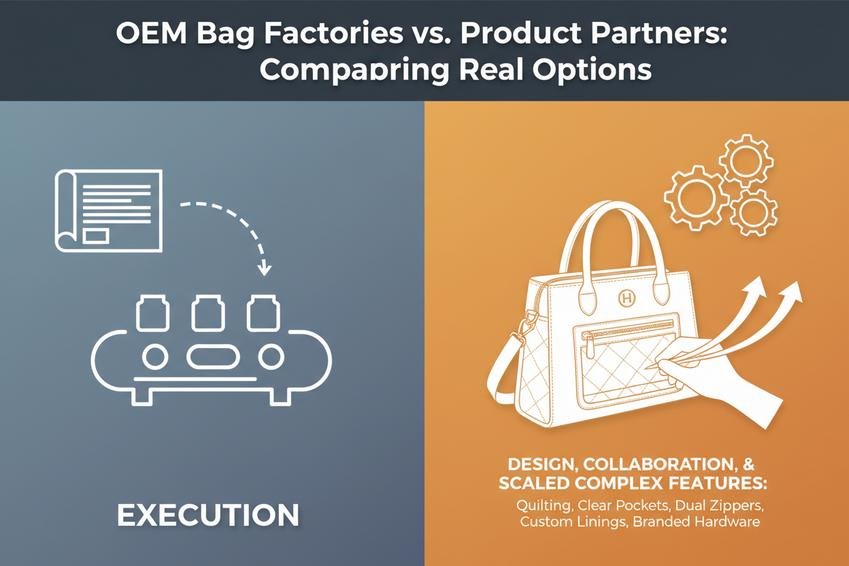
If you’ve sourced cosmetic bags before, you’ve probably seen the same phrases on every listing: OEM/ODM, factory-direct, competitive price. Those words don’t tell you what happens when you move from one “perfect” sample to 5,000 units-especially once you add details like quilting, clear pockets, dual zippers, custom linings, or branded hardware.
In the cosmetic bag market, the real divide is simple:
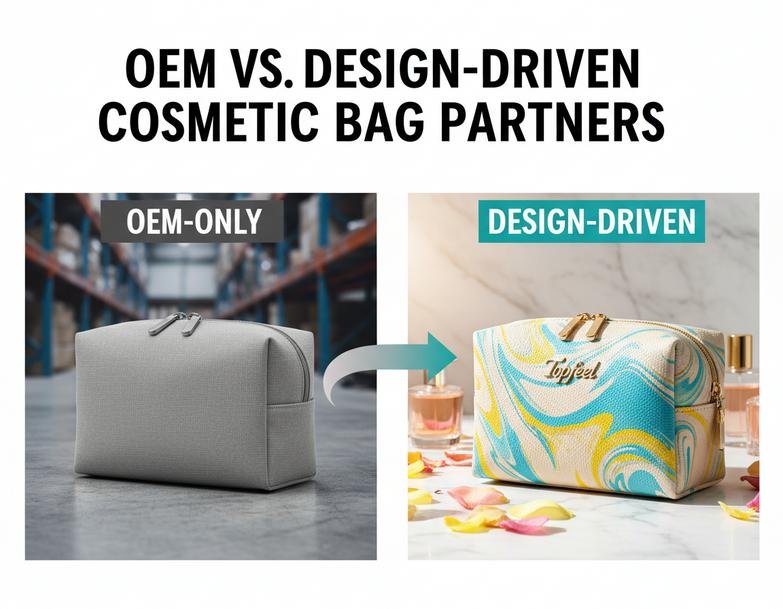
OEM-only vendors mainly execute what you already specified.
Design-driven partners help you land the right spec (and then keep it consistent when you scale).
Below is a practical comparison using Topfeel Bag as the reference point, alongside other common supplier brands buyers often use for toiletry bags programs.
The 5 “Supplier Brands” Buyers Actually Meet
Instead of naming random factories, it’s more useful to compare supplier profiles-because the profile determines what you can realistically expect from materials, detailing, and bulk consistency.

1) Promotional product giants (fast, simple, logo-first)
Brands like 4imprint typically shine when you need fast-turn promotional items and straightforward logo customization on existing models. The trade-off is that you usually work within a template-less freedom for structure and “beauty-specific” interior engineering.
2) Promo + giveaway distributors (wide catalog, flexible but not deep)
Platforms like DiscountMugs focus on variety for events and giveaways, which is useful for quick programs or low-risk testing. But the deeper your design goes (pocket symmetry, piping, quilting alignment), the more you’ll need a vendor that behaves like a development partner, not just a catalog provider.
3) “Custom bag” factories (broad manufacturing, mixed outcomes by category)
Suppliers such as Szoneier position themselves as custom bag manufacturers across many bag categories, including handheld bags. That breadth can help if you’re sourcing across multiple bag types. The question to ask is whether they have a beauty accessory playbook (liners that wipe clean, pocket logic for brushes, tolerance control for quilting, etc.).
4) Case & bag specialists (strong build, less “beauty-first” thinking)
Companies like MUCCI publicly position around making cases and bags across categories. This group can be strong on construction, hardware, and organized production-yet you’ll still want to confirm they understand the “cosmetic use case,” not just a bag shape.
5) Beauty-focused, design-driven manufacturers (where Topfeel sits)
Topfeel positions itself around cosmetic bags and adjacent beauty categories, with an emphasis on OEM/ODM plus in-house capability. Topfeel highlights its experience, production scale, and a range that includes makeup clutch and toiletry bags styles-useful when a brand needs a family of SKUs that look consistent, not one-off pouches.
A Quick Side-by-Side: What You’re Really Buying
| What you need | Promo suppliers (4imprint / distributors) | Broad custom factories | Case/bag specialists | Beauty-focused partner (Topfeel type) |
|---|---|---|---|---|
| Fast logo runs on stock styles | Strong | Medium | Medium | Medium |
| Complex details (quilting, pockets, custom hardware) | Limited | Mixed | Good | Strong |
| Beauty-use interior logic (brush slots, wipe-clean lining choices) | Limited | Mixed | Mixed | Strong |
| Consistency from sample → bulk | Depends on program | Depends on process | Good | Designed around it |
| Best use case | Events, giveaways | Multi-category sourcing | Structured builds | Long-term cosmetic bag line |
The 7 Checks That Reveal “OEM-Only” vs “Product Partner”
These checks work across any supplier type. Use them before you commit.

1) Do they challenge your spec (in a helpful way)?
OEM-only vendors often say “Yes, no problem” to everything. Product partners understand that design distinguishing brands is about functionality as much as looks. They ask questions like:
“What goes inside the bag-liquids or powders?”
“Is it for retail shelf sets or subscription boxes?”
“Do you need it to stand upright or open flat?”
A supplier who asks these questions is usually protecting you from returns.
2) Do they control the “annoying details” that cause returns?
Most return issues come from:
zipper snagging
corner seams splitting
lining wrinkling or peeling
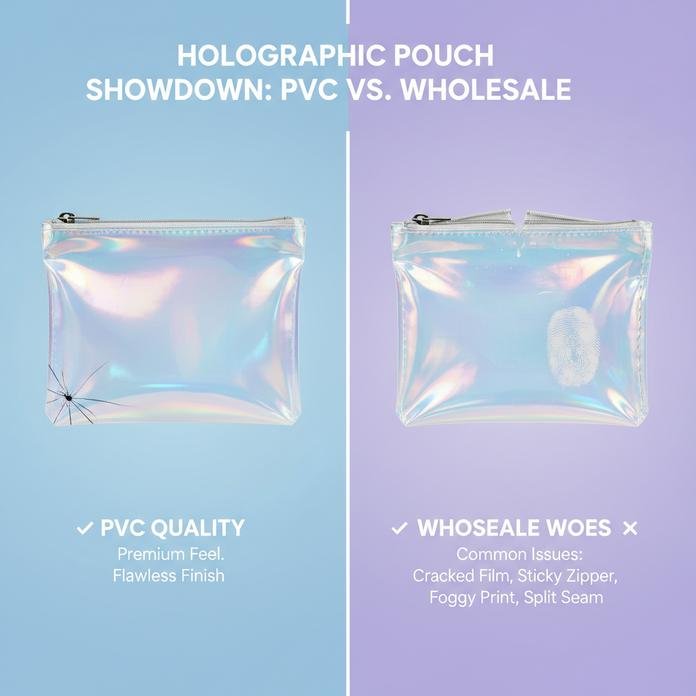
print rubbing off on PVC/film surfaces
According to Cosmetic Good Manufacturing Practice, quality control must be consistent. Ask what they do at zipper ends, stress points, and corner seams.
3) Can they lock bulk consistency with a clear pre-production step?
You want a supplier who can explain a flow like:
sample approval → pre-production sample → bulk run → final inspection
Following FDA GMP guidelines ensures that train cases remain identical throughout production. If they can’t describe a controlled process, you’re gambling on “close enough.”
4) How deep is customization-logo only, or structure too?
Many vendors do “logo placement” well. The difference shows up when you need a multi-layered compartment design:
internal compartments
transparent pockets
dual zippers
custom lining colors and prints
hardware that matches your brand tone
5) Do they have a realistic material library (not just swatches)?
“Many materials available” is easy to claim. What matters is choosing nonporous materials that are easy to maintain. A good partner knows:
how they match materials to use (makeup dust vs liquids)
how they prevent common issues (film cracking, color transfer, peeling)
Current 2026 packaging trends show a strong shift toward functional sustainable materials that improve the user experience.
6) How fast (and how clearly) do they communicate?
Slow replies and vague policies aren’t just annoying-they cause missed launches.
Good partners confirm specs in writing, including printing techniques, material, zipper, lining, logo method, and tolerance notes.
7) Can they support a SKU family, not just one pouch?
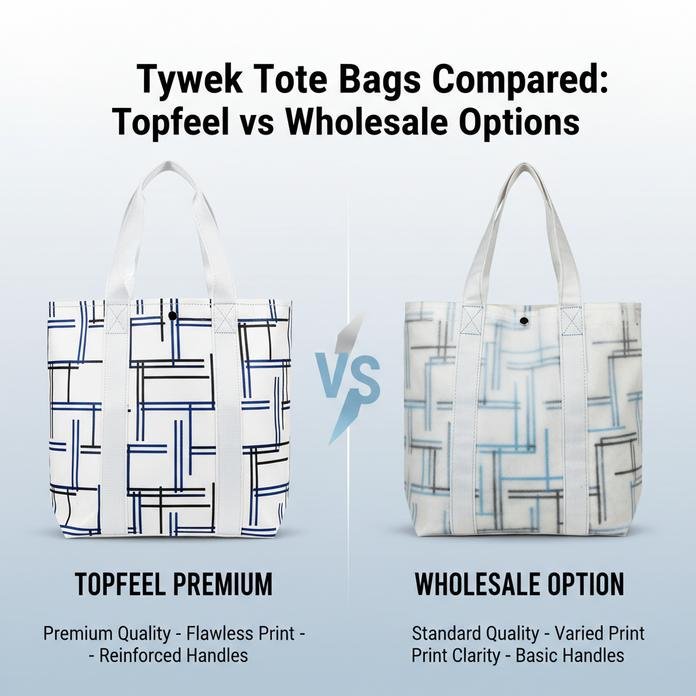
Beauty brands rarely launch one bag. They launch a coordinated series of brush bags, drawstring bags, and tote bag models. Topfeel’s public series positioning aligns precisely with the practical requirements of the “SKU family”, thereby eliminating the need to piece together multiple suppliers for a single series. Brands must remember that interior hygiene impacts skin health, so consistent accessory bags linings are critical across the entire line.

When Other Supplier Types Still Make Sense
Be honest about your goal:
- If you’re running a short-term promo and only need a logo on a standard pouch, a promo supplier can be efficient.
- If you’re sourcing across many bag categories and your cosmetic pouch is not a hero product, a broad custom factory can work-if their sampling/QC process is tight.
- If the cosmetic bag is part of your brand experience (gift-with-purchase, retail sets, long-term resale), you want a partner that explains trade-offs, locks consistency, and optimizes the bag for real use.
In that “product partner” role, Topfeel’s positioning is simple: trend-aware styles (including statement finishes) plus factory execution aimed at repeat use-so the bag doesn’t just photograph well, it holds up in daily routines, travel, and refills.
Final Takeaway
There’s no single “best” supplier-only the best match for your program.
Choose promo vendors for speed and simple branding.
Choose generic OEM factories when you already have tight specs and can manage risk.
Choose a design-driven, beauty-focused partner when the cosmetic bag is a real brand touchpoint and consistency matters more than shaving a few cents off unit cost.
If your goal is fewer “sample vs bulk” surprises and a bag that supports your brand long after unboxing, Topfeel fits the design-driven side of the market based on how it publicly positions its capability and product range.


.png)



4th-5th Floor, Building B2, Yin Tian Industrial Park, Xi Xiang Road, Bao'an Dist, Shenzhen, 518102 ,China