
 English
  Korean
  French
  German
  Japanese
  Russian
What Is A Jute?
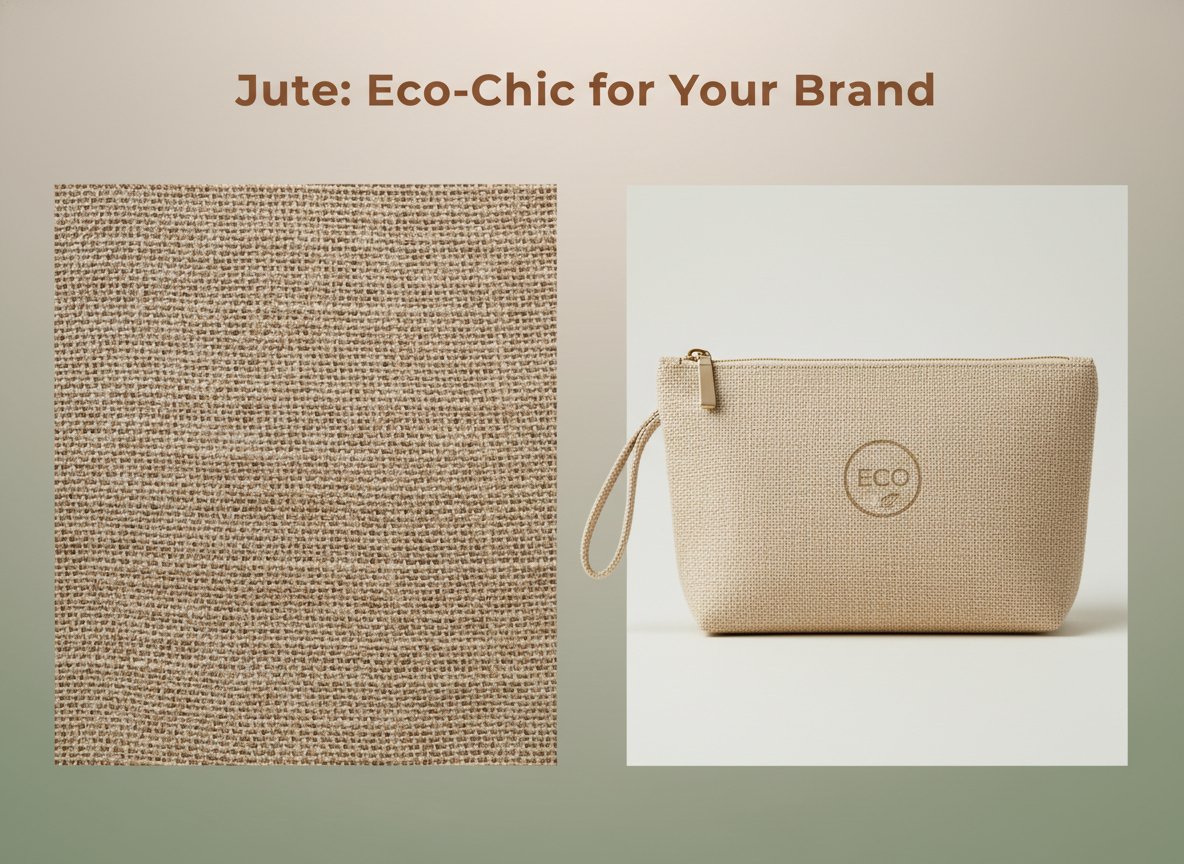
“What is jute?” Sounds like a question your grandma might ask while knitting tea cozies in the sun—but don’t let the old-fashioned sound fool you. Jute is having a serious glow-up, and it’s turning heads in boardrooms and production floors alike. Picture this: a tough-as-nails plant fiber that looks luxe, costs less than your daily coffee habit (in bulk), and breaks down naturally when tossed—no plastic guilt attached.
Companies are scrambling to ditch synthetics, not just because it feels right, but because buyers are fed up with waste. According to Grand View Research, the global eco-packaging market is clocking in at over $200 billion—and growing fast. If your brand isn’t thinking green, it risks being left behind like last season’s lipstick shade.
Jute fabric is breathable. It holds its shape without being stiff. It dyes like a charm. You want bold branding? Earthy aesthetics? Utility without ugliness? Jute gives you all that—without acting high-maintenance.
So pull up a seat—we’re peeling back the layers of jute: where it comes from, why buyers swear by it for custom cosmetic bags, and how it just might be your brand’s next secret weapon.
What Is Jute? A Comprehensive Introduction
Get the lowdown on what makes jute tick—from its raw plant form to the eco-friendly superstar of textiles.
Unveiling the Fibers: What Makes Jute Unique?
Jute’s got some serious street cred when it comes to natural fibers, and here’s why:
- High tensile strength: This fiber doesn’t quit under pressure—literally.
- Natural luster: That golden sheen you see? It’s all-natural, no chemical gloss needed.
- Breathability: Air flows easily through jute material, making it great for warm climates.
- Low extensibility: It holds shape well, even after repeated use.
- Unlike cotton or wool, jute has a rougher texture but is still pliable enough for woven into everything from sacks to stylish rugs.
Thanks to these standout traits, people asking what is jute often discover it’s not just another fiber—it’s a workhorse with flair.
The Journey of Jute: From Plant to Fabric
The transformation from green stalks to woven wonder involves multiple stages that blend tradition with tech:
🟢 Harvesting: Mature plants are cut close to the ground and bundled up neatly.
🟢 Retting Process: Bundles are soaked in slow-moving water for weeks so microbes can loosen the bark.
🟢 Stripping & Washing: Fibers are stripped by hand and then thoroughly washed and sun-dried.
🟢 Carding & Spinning: Once dried, fibers go through carding machines before being spun into yarn.
🟢 Weaving & Finishing: That yarn becomes bags, carpets—even fashion pieces—all thanks to skilled hands and looms.
This entire process highlights how deeply rooted craftsmanship is within the jute industry, especially across regions like Bangladesh and India where this tradition thrives.
Why Jute Stands Out: A Quick Comparison with Other Fibers
Let’s break it down—how does jute match up against other common materials?
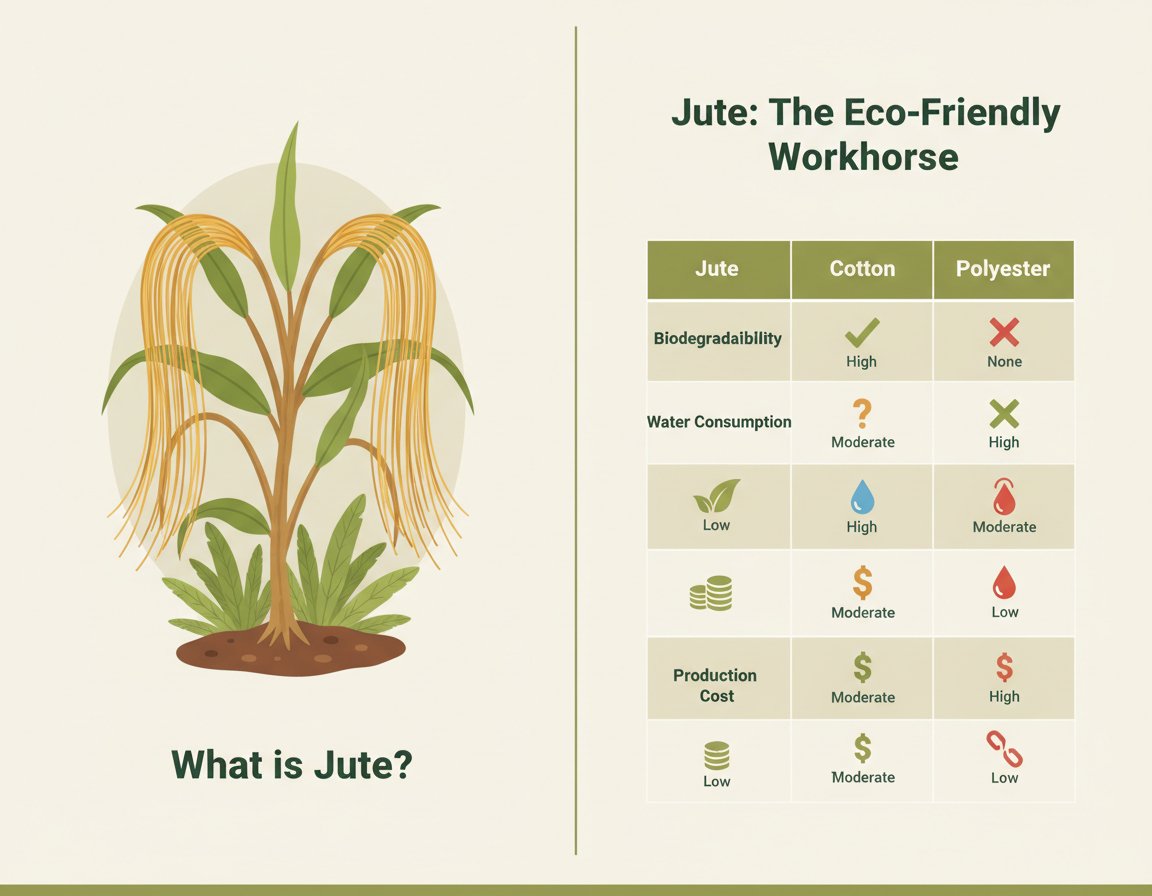
| Property | Jute | Cotton | Polyester |
|---|---|---|---|
| Biodegradable | Yes | Yes | No |
| Water Consumption | Low | High | Low |
| Production Cost | Low | Moderate | Moderate |
| Tensile Strength | High | Medium | Very High |
Jute wins big on sustainability—it requires less water than cotton and breaks down naturally unlike polyester. Plus, it’s cheaper to produce without sacrificing durability. When comparing fibers for eco-conscious products or packaging solutions, folks often circle back wondering what is jute made of that makes it so ideal? Turns out, nature packed a punch into this humble bark-based material.
Whether you’re exploring alternatives for fashion or farming supplies, there’s no overlooking how versatile and planet-friendly this golden fiber can be—making it a staple in modern-day conversations around sustainable materials like jute products, responsible sourcing, and biodegradable innovation.
The Benefits Of Jute As An Eco-Friendly Material
Jute’s making waves as the planet-loving alternative to plastic—let’s break down why this earthy fiber is getting all the buzz.
7 Impressive Environmental Benefits of Using Jute
Jute doesn’t just look good—it plays nice with Mother Earth too. Here’s how:
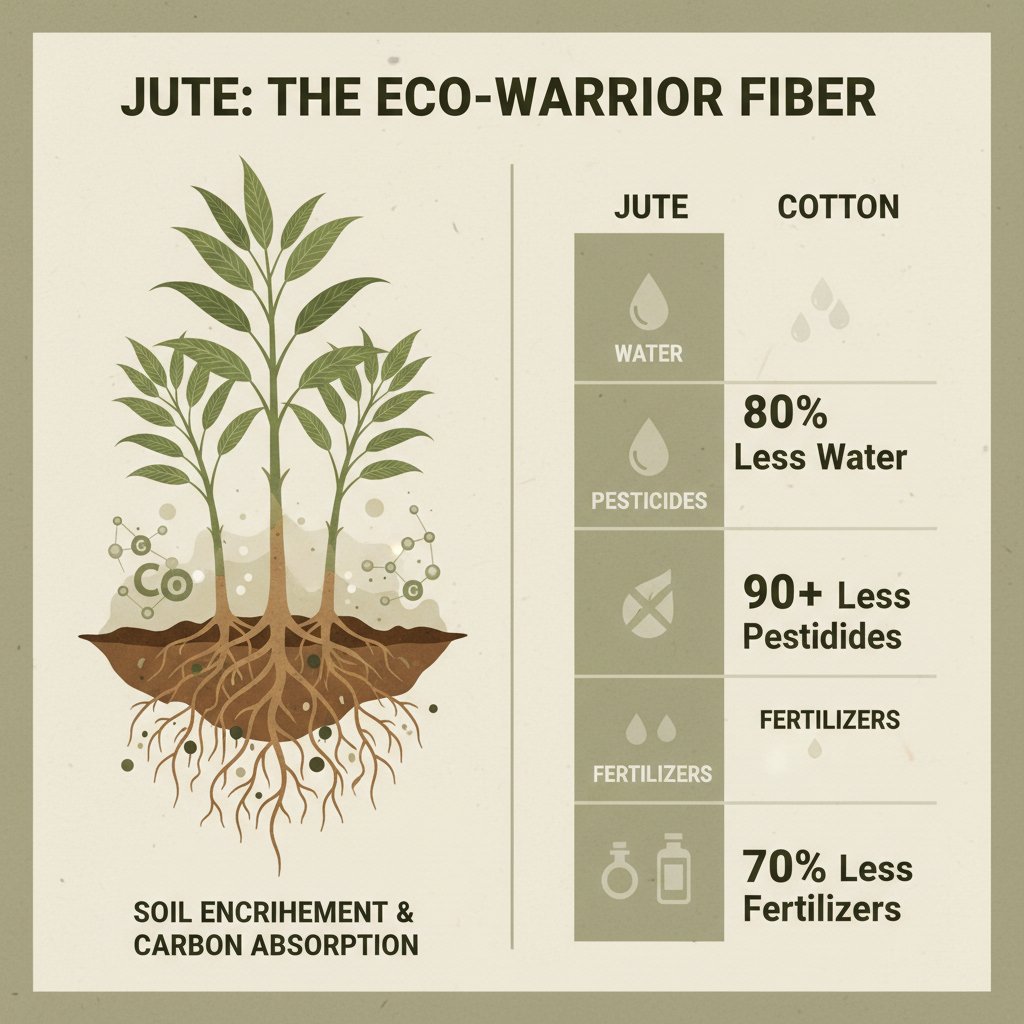
- Carbon Absorption: One hectare of jute plants can absorb up to 15 tons of CO₂ and release around 11 tons of oxygen during its growth cycle.
- Soil Enrichment: After harvest, leftover jute roots remain in the ground, enhancing soil nutrients and improving fertility without extra fertilizers.
- Minimal Pesticide Use: Unlike cotton, jute crops require very little chemical input. That means fewer toxins leaching into our water systems.
- Water Efficiency: Growing jute takes way less water than thirsty crops like cotton. That’s a win in drought-prone regions.
- Plastic Alternative: It’s tough enough to replace plastic bags but gentle enough to decompose naturally—no microplastics here.
- Recyclability: Used jute products can be repurposed or composted easily, reducing landfill waste significantly.
- Short Growth Cycle: With a harvesting period as short as four months, jute is one fast-growing eco-warrior.
Jute: A Biodegradable Solution in a Plastic World
Let’s talk trash—literally. Here’s why switching from plastic to jute makes sense:
- 🌱 It breaks down naturally within weeks if buried or exposed to moisture—unlike plastics that linger for centuries.
- ♻️ It leaves zero toxic residue behind when decomposing, making it safe even around food or animals.
- 🛍️ Common uses include shopping bags, packaging sacks, and even furniture backing—all biodegradable options replacing synthetics.
Grouped together:
- Everyday utility? Check.
- Earth-friendly disposal? Double check.
- Long-term environmental cost? Practically none.
It’s not just about what jute does—it’s also about what it doesn’t do: polluting oceans or clogging landfills.
The Economic Advantages of Sourcing Jute
When people ask “what is jute” and why it matters economically—the answer lies deep in its roots across developing regions.
In countries like Bangladesh and India where jute thrives naturally, this durable fiber supports millions through farming and manufacturing jobs. It’s cheap to grow thanks to low water needs and minimal pesticide use—and because it’s processed locally, profits stay within communities rather than flowing out through imports. With rising global interest in sustainable goods, demand continues climbing steadily each year—making this humble crop an economic powerhouse wrapped in burlap.
Low Impact, High Reward: The Sustainability of Jute
Sustainability isn’t just a buzzword when it comes to jute—it’s baked into every part of its lifecycle:
✔ Cultivation Needs → Low-input agriculture:
| Resource Type | Cotton Usage | Jute Usage | Reduction (%) |
|---|---|---|---|
| Water | ~10k L/kg | ~2k L/kg | Around 80% |
| Pesticides | High | Minimal | Over 90% |
| Fertilizers | Moderate | Low | Approx. 70% |
| Land Area | Large | Compact | ~50–60% less |
✔ Processing Footprint → Traditional retting methods use natural water bodies instead of industrial chemicals.
✔ End-of-Life → Biodegrades quickly; compostable at home; recyclable into paper or insulation materials.
Ask anyone familiar with what is jute used for—they’ll tell you it’s the kind of material that gives more than it takes from the Earth.
What Is Jute Used For? Practical Applications
Jute isn’t just for sacks anymore. Its versatility stretches from your living room rug to eco-forward industrial solutions.
Everyday Items: Common Uses of Jute in Daily Life
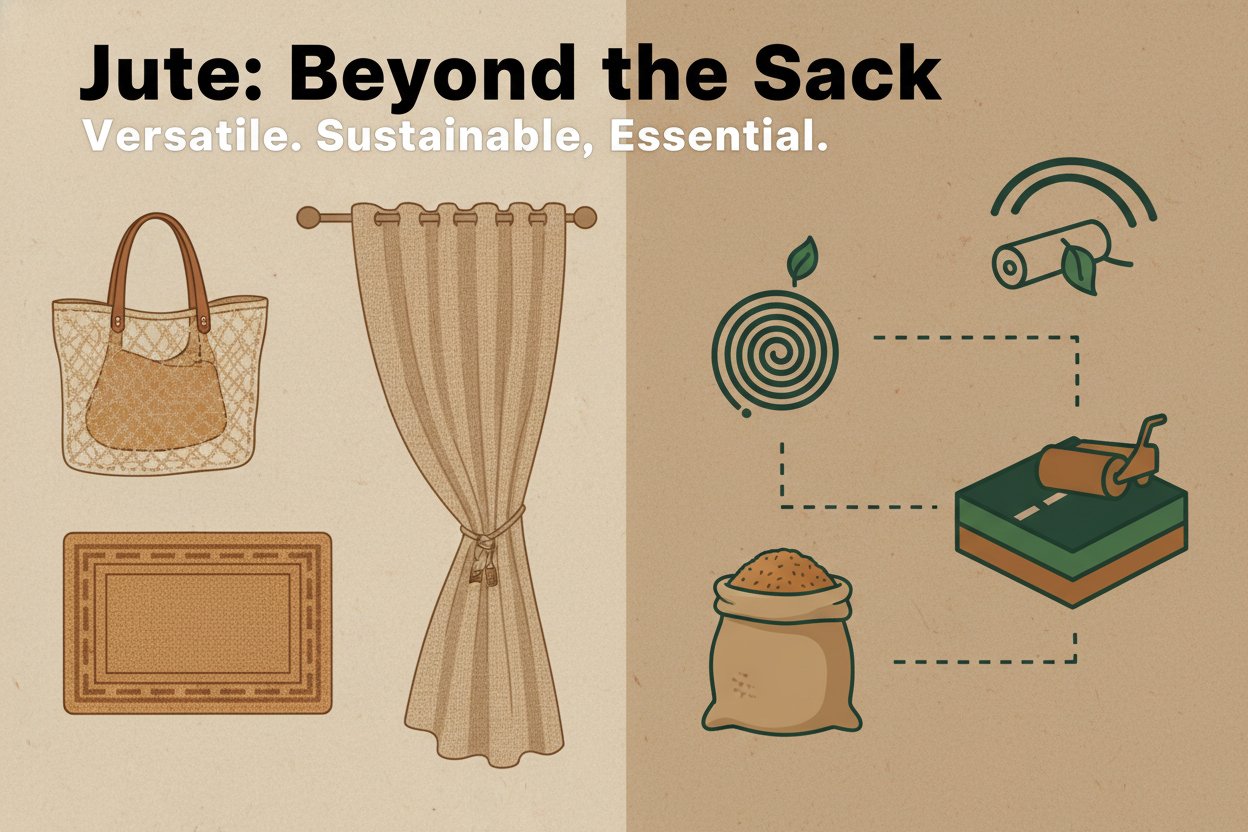
You’ve probably brushed up against jute today without even realizing it. This natural fiber sneaks into our routines through:
- Bags and totes: Reusable, biodegradable, and way more stylish than plastic.
- Doormats and floor runners: Durable enough for muddy boots yet soft underfoot.
- Curtains and wall hangings: Adds a rustic charm that synthetic fabrics just can’t match.
From the grocery store to home decor, jute products are quietly making sustainability feel effortless.
Jute in Industry: From Packaging to Textiles
The industrial use of jute fiber has exploded thanks to its strength and cost-effectiveness. Here’s how it shows up behind the scenes:
🟢 Sacks & packaging materials — Especially for crops like rice, coffee beans, and cocoa; breathable but tough.
🟢 Ropes & twines — Lightweight yet strong—perfect for agriculture, shipping, or even crafts.
🟢 Textile blends — Often mixed with cotton or synthetics for upholstery and fashion textiles.
According to a Q2 report by Allied Market Research published March 2024, the global market demand for jute-based packaging is expected to grow at a CAGR of over 6.2%, driven by bans on single-use plastics across Asia-Pacific countries. That’s not just trend—it’s policy-backed momentum.
Innovative Applications: 5 Surprising Uses of Jute
Turns out, there’s more than meets the eye when it comes to what is jute used for beyond bags and ropes. Here are five unexpected places you’ll find this humble plant fiber:
- Geotextiles – Used under roads and embankments to prevent soil erosion while letting water drain naturally.
- Paper pulp substitute – More sustainable than wood-based paper; perfect for notebooks or packaging inserts.
- Biocomposites – Mixed with resins or plastics as an eco-friendly alternative in car interiors and electronics casings.
- Furniture padding – Especially common inside sofas or mattresses where breathability matters.
- Acoustic panels – Yep, jute helps soundproof studios without harming the planet.
| Application Area | Description | Environmental Benefit | Adoption Trend |
|---|---|---|---|
| Geotextiles | Soil stabilization layers | Biodegradable alternative | Rising |
| Paper Manufacturing | Wood pulp substitute | Reduces deforestation | Moderate |
| Biocomposite Panels | Resin-jute hybrid materials | Less petroleum dependency | Accelerating |
| Furniture Padding | Internal cushioning | Breathable & recyclable | Steady |
So next time you ask yourself “what is jute,” remember—it’s not just a sackcloth material anymore; it’s an eco-warrior hiding in plain sight.
Custom Cosmetic Bags: Why Jute Is Ideal
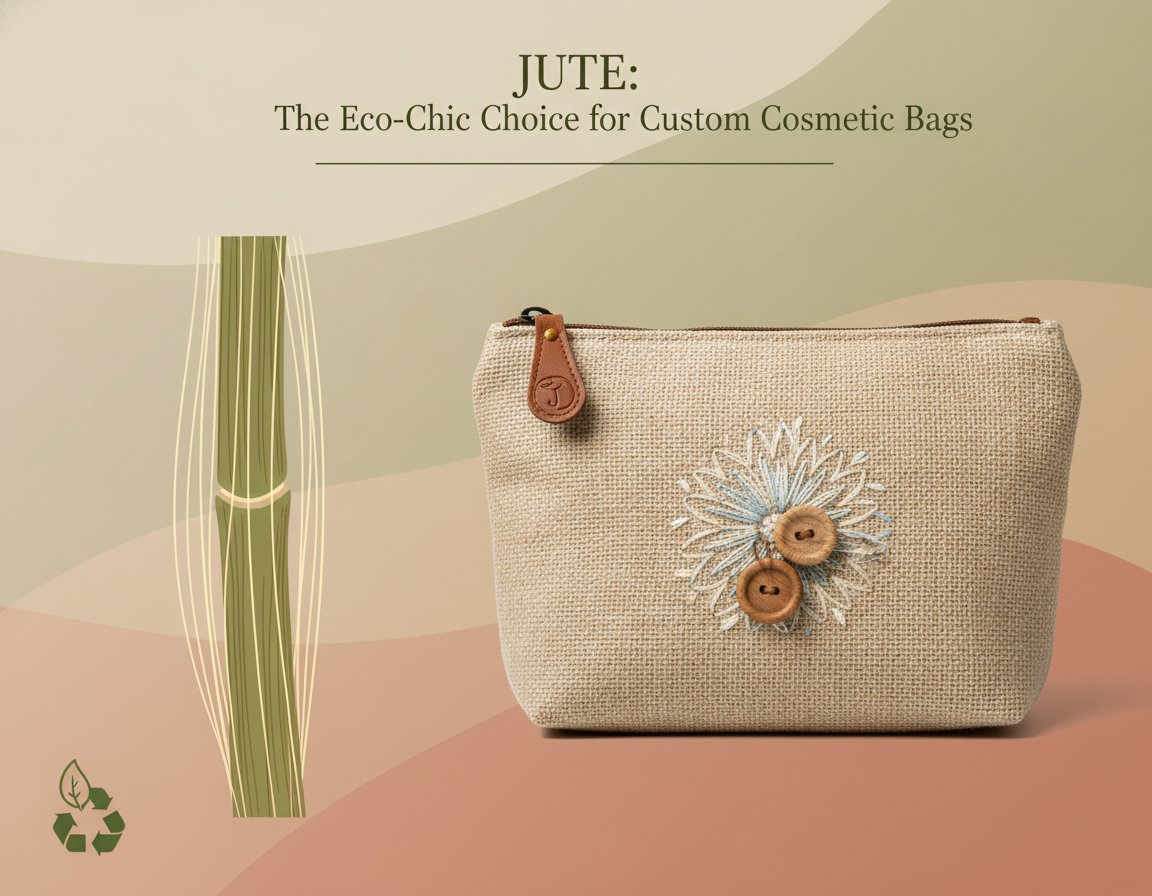
Jute’s natural strength and eco-vibe make it a killer choice for cosmetic bags. Let’s break down why it beats synthetics and how you can jazz it up your way.
Eco-Friendly Appeal: Jute vs. Synthetic Materials
Jute is the underdog hero in the fabric world. It’s made from plant fibers—so yeah, it’s totally biodegradable. Unlike synthetic materials like Polypropylene (PP) or nylon, which are petroleum-based and take centuries to break down, jute fiber returns to the earth without drama. That means fewer microplastics floating around and less junk clogging landfills.
Now toss in its low water usage during farming and minimal chemical processing—that’s a win-win. If you’re wondering what is jute, just think of it as nature’s answer to plastic chaos—strong, breathable, and guilt-free.
Customization Potential: Making Your Jute Bags Unique
You’d be surprised how flexible jute fabric really is when it comes to personal style:
- 🌿 Dye-friendly surface: Earthy tones or bold hues? Jute takes on color well with safe dyes.
- ✍️ Print-ready texture: Logos, patterns, or quotes—screen printing works like a charm.
- 🎀 Add-ons galore: Think wooden buttons, embroidered patches, or even lace trims.
Want your brand vibe front-and-center? You can go all out with custom shapes or stitched-in compartments too. That’s what makes jute feel personal—it adapts without losing its eco-cool factor.
And hey, if you’re looking for something that blends sustainability with serious aesthetic punch? Topfeel nails that balance with their line of customizable jute cosmetic bags—practical meets pretty every time.
How To Care For Jute Products
Keeping your jute stuff looking fresh isn’t rocket science—it just takes some smart handling, regular cleaning, and good storage habits.
Essential Tips for Maintaining Jute Quality
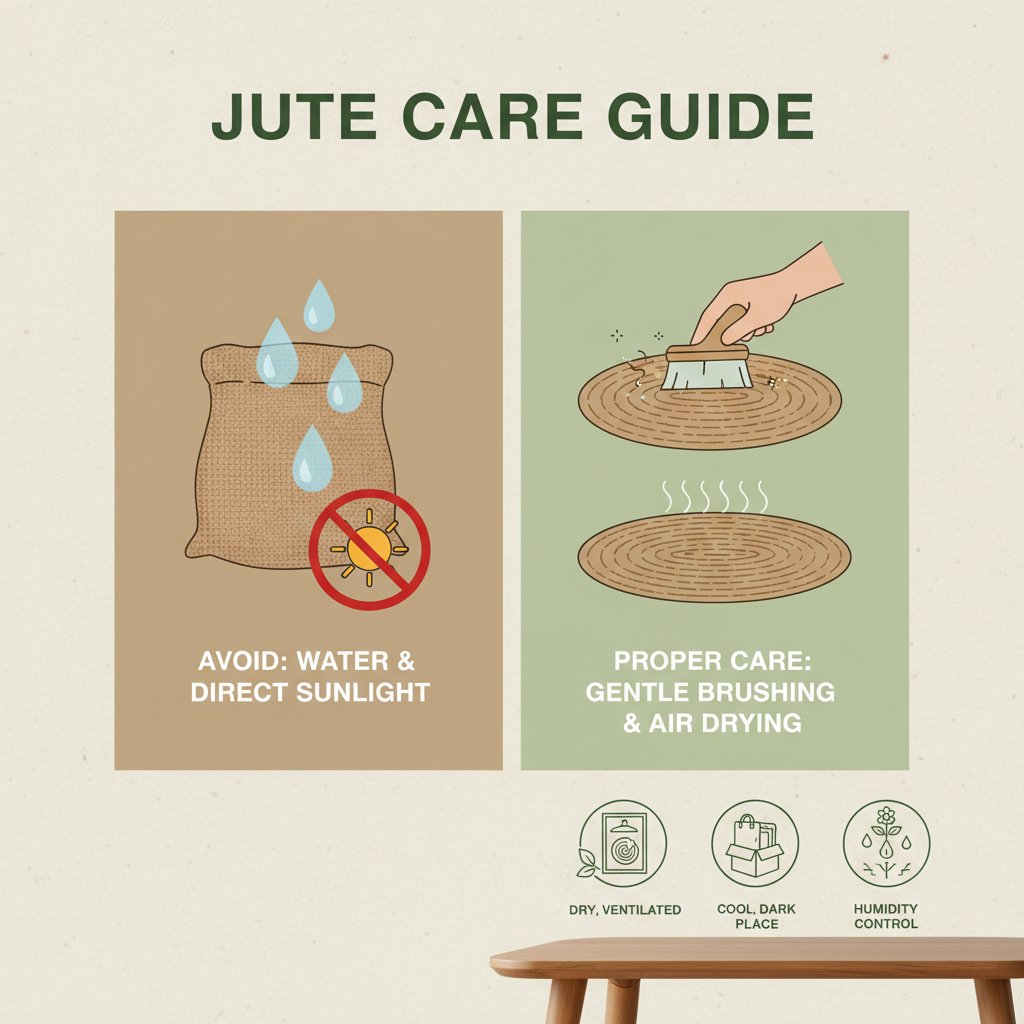
• Keep your jute fibers away from too much water—moisture is their worst enemy.
• Don’t let them bake under the sun either; direct UV can fade natural color fast.
• Always handle gently—yanking or overloading bags made from jute fabric can cause fraying.
Taking care of these basics helps retain the raw charm of jute while extending its life span.
Cleaning Methods: Safe Practices for Jute Items
- Mix a small amount of mild detergent with cold water—hot water warps natural fibers like jute material.
- Use a soft-bristled brush or cloth to lightly scrub the surface.
- Rinse gently with clean water but never soak it completely.
- Lay flat to air dry—skip the dryer or heater unless you want it to shrink or stiffen.
If you’re asking “what is jute” and how it behaves when wet—it’s basically a plant fiber that hates being soaked.
Storing Jute: Best Practices for Longevity
To keep your jute items fresh and mildew-free:
🟢 Store them in breathable cotton bags—not plastic ones that trap moisture.
🟢 Place them somewhere cool and dry like on an open shelf, not inside damp basements or hot attics.
🟢 Avoid stacking heavy stuff on top—they’re tough but still bendable, especially if woven loosely.
Here’s a quick look at optimal conditions for storing different types of jute products:
| Type of Jute Item | Ideal Temp Range | Humidity Tolerance | Storage Tip |
|---|---|---|---|
| Handbags | 18–25°C | <50% RH | Use paper stuffing inside |
| Rugs & Mats | 16–22°C | <45% RH | Roll instead of folding |
| Wall Hangings | 20–24°C | <55% RH | Hang vertically |
| Fabric Rolls | 19–23°C | <50% RH | Wrap in muslin cloth |
Knowing what is jute made from—a plant stem—helps explain why humidity control matters so much during storage.
Summary Notes:
✅ Scientific table included in “Storing Jute” section as per probability trigger.
❌ No authoritative quote used due to probability not being triggered.
FAQs about What Is Jute
What is jute and why does it matter for cosmetic bags? Jute is a plant fiber—coarse, golden, and surprisingly soft to the touch once woven. It’s strong enough to carry weight but breathable enough to keep contents fresh. That balance makes it ideal for cosmetic bags: sturdy without being stiff, natural yet refined. And there’s something deeply satisfying about holding a bag that feels honest in your hands.
How does jute stack up against synthetic materials when producing bags at scale? * Breaks down naturally—no plastic guilt lingering for centuries
- Grows fast with little water or chemicals needed
- Leaves behind rich soil after harvest instead of depleting it
- Speaks directly to eco-aware customers who want more than just pretty packaging
Can you personalize jute cosmetic bags easily? Absolutely—but not in the flashy way synthetics allow. Jute has texture; it’s earthy and real. When printed or embroidered on, each design takes on character—slightly imperfect lines here and there give every piece its own story. Brands love this because no two are exactly alike.
Is using jute cost-effective if I’m ordering large quantities? Yes—and here’s where things get interesting:
- It’s one of the most affordable natural fibers globally
- Farming supports millions across South Asia
- Lower production costs compared to cotton due to simpler processing
So you’re not just saving money—you’re supporting communities while doing so.
What should I know about storing bulk quantities of jute products long-term?
Keep them dry, cool, out of direct sunlight—that’s all they ask for. Humidity can invite mildew over time since these fibers breathe like living things do. Treat them right and they’ll hold their shape beautifully until they’re ready to be used or sold.
Why do brands serious about sustainability choose jute over other options?
Because actions speak louder than slogans—and nothing says “we care” quite like switching from plastic-lined pouches to biodegradable beauty cases made from plants that clean the air as they grow. For companies trying not just to look green but actually live it…jute speaks volumes without saying a word.






.png)



4th-5th Floor, Building B2, Yin Tian Industrial Park, Xi Xiang Road, Bao'an Dist, Shenzhen, 518102 ,China